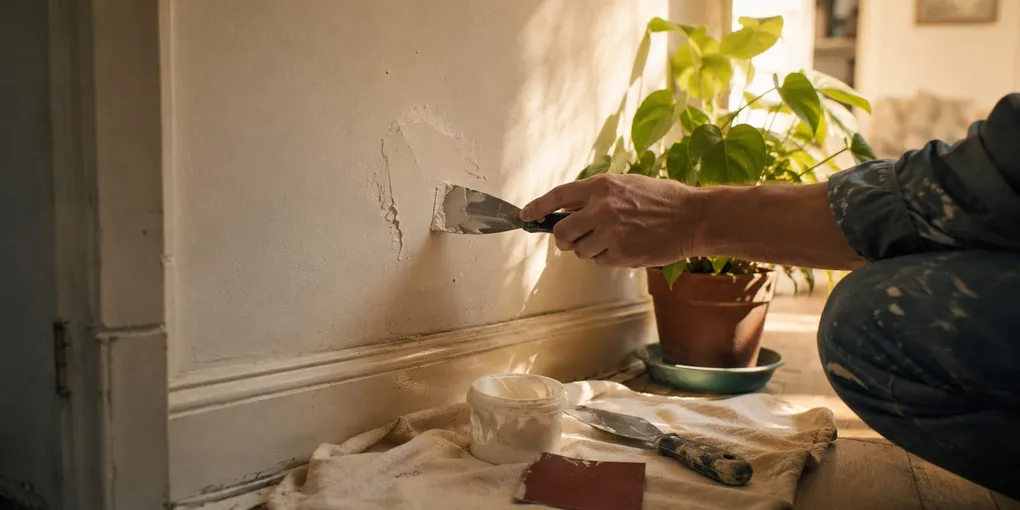
A good patch is about filling in thin layers, letting it dry, sanding flush and priming before you paint. The usual mistake is the same one: a thick blob of filler that sinks, cracks and shows through the paint. Here’s how to make the repair invisible, based on the size of the damage, plus the tricks that make the difference.
What you’ll need
- Spackle/filler: ready-mixed for small holes; setting-type (powder) for deep holes, because it shrinks less.
- A putty knife (a wide 4–6 inch one helps you feather and hide the repair).
- Fine sandpaper (120–180 grit) and a sanding block or sponge.
- Self-adhesive mesh (scrim) tape for cracks and medium holes.
- Primer or sealer for the patched area.
By type of damage
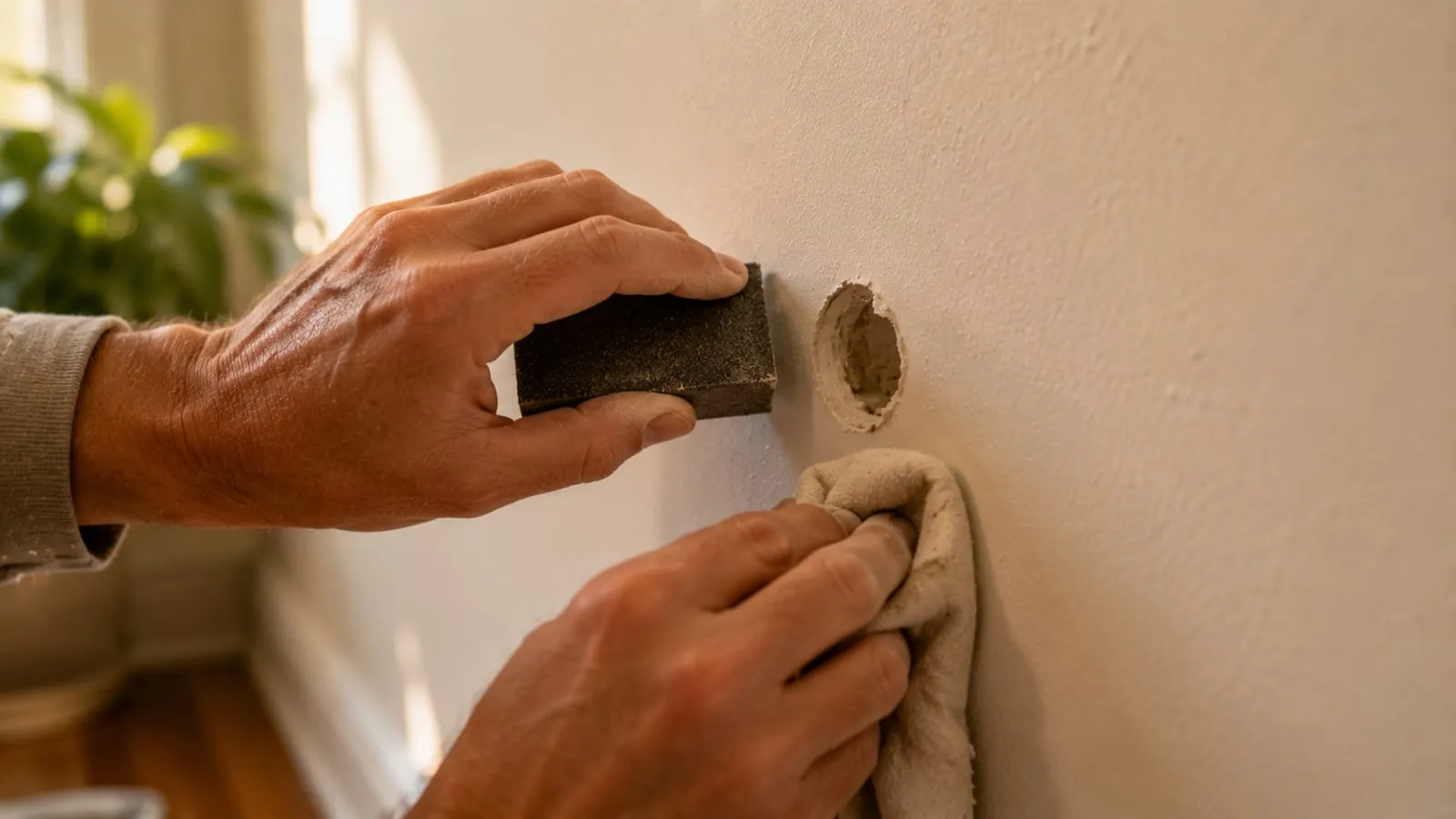
- Nail or screw holes (small): one pass of filler, smooth and sand.
- Anchor holes (medium): fill in two coats; if the anchor blew out the edge, cut away the loose bits first.
- Large holes in drywall: cover with mesh or a drywall patch and apply 2–3 coats of compound, feathering outward.
- Fine cracks: open them slightly into a “V” with the knife tip so the filler keys in; if a crack keeps coming back, use flexible filler or mesh, not a rigid one.
Step by step
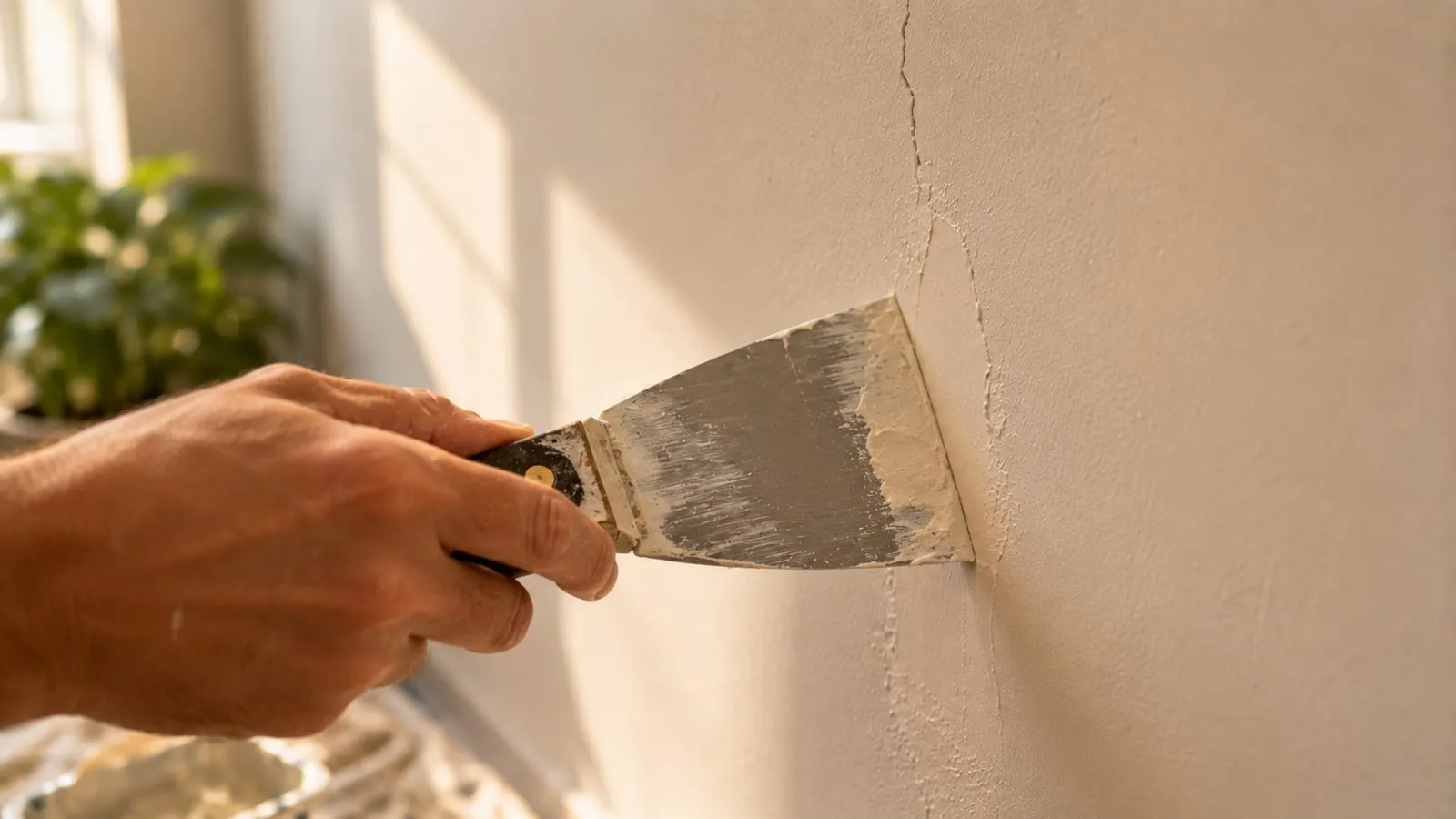
- Prep the hole: remove loose material, sand the edges flush and wipe off dust. On very dry plaster, lightly dampen the edge — otherwise it sucks the water out of the filler and it cracks.
- Fill in thin layers, slightly proud of the wall (filler shrinks as it dries). For deep holes, two or three thin coats beat one thick coat.
- Smooth with the knife, pressing and dragging; on large holes, feather the edges outward with a wide knife so the patch doesn’t show.
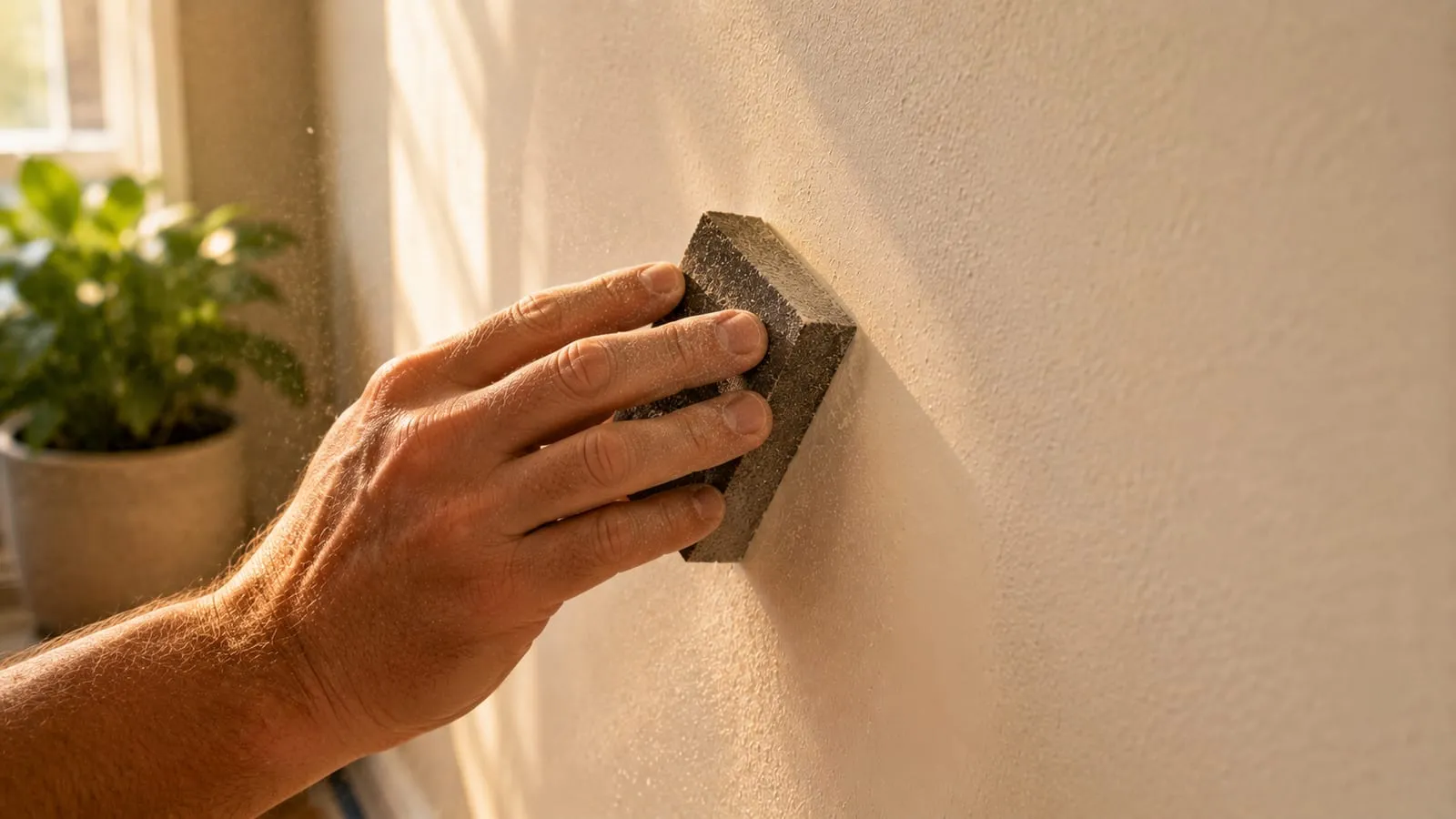
- Let it dry fully and sand gently with fine grit until flush. Run your hand over it: it should feel continuous.
- Prime the repair before painting: filler is porous and, unsealed, leaves a dull halo under the paint (flashing).
Pro tricks
- Overfill and sand back: it compensates for shrinkage and avoids a sunken patch.
- Two thin coats instead of one thick: dries without cracking or sagging.
- Feather it wide: the farther you drag the edges out, the more invisible the patch.
- Always spot-prime the repair: that’s what stops the mark showing when you paint.
- Cracks that reappear: mesh + flexible filler; a rigid filler just cracks again.
- Nail pops: drive a new screw next to it, remove or reset the popped nail, then fill.
Common mistakes
- Painting over filler without priming: the patch looks dull.
- A thick blob: it shrinks, sinks and cracks.
- Leaving loose debris: the filler won’t bond and falls out.
- Sanding with coarse grit: it scratches the area around the patch.
Frequently asked questions
Spackle or joint compound?
For small holes, spackle/filler. For drywall seams or large repairs, joint compound with mesh.
How long does it take to dry?
A thin coat, 1–2 hours; deep holes or powder filler, per the maker. Only sand when it’s fully dry.
Can I paint straight over it?
Better not: prime the patch first so it doesn’t flash.
What about a big hole with nothing behind it?
Use a mesh patch or a drywall plug before the compound.
With the wall patched and sanded, you’re ready to paint it like a pro.